Table of Contents
One of the most practical tools that can make daily life easier is a parking permit for people with disabilities. This permit provides valuable parking benefits that reduce physical strain and improve accessibility when visiting shops, medical appointments, or community spaces.
If you or someone you care for needs better access to parking due to mobility limitations, understanding the application process is the first step. This comprehensive guide walks you through everything you need to know about obtaining an Australian disability parking permit and how it fits within broader community transport support options.
What Is a Disability Parking Permit?
A disability parking permit, also known as a disabled parking permit, is an official document that allows people with mobility limitations to access designated parking spaces and receive parking concessions. These permits are recognised across Australia, making them valuable for both local trips and interstate travel.
The permit is designed to assist individuals who face challenges with walking or mobility, helping them park closer to their destinations and reducing unnecessary physical strain. In most states, permits are issued under the national Mobility Parking Scheme, ensuring consistent recognition across jurisdictions.
Who Is Eligible for a Disabled Parking Permit?
Eligibility for a parking permit for people with disabilities is based on your mobility limitations rather than your specific medical condition. You may qualify if you:
- Have difficulty walking due to a permanent or temporary physical disability
- Require the use of mobility aids such as wheelchairs, walking frames, or crutches
- Experience significant pain or fatigue when walking even short distances
- Have a medical condition that severely limits your ability to move around safely
Both individuals and community service organisations that transport people with disabilities can apply for these permits. The key requirement is that a medical practitioner must verify your mobility limitations.
Types of Disability Parking Permits
There are three main types of permits issued under the parking permit for people with disabilities program:
Permanent Permits: Issued to individuals with long-term or permanent mobility limitations. These permits are typically valid for 3 years and can be renewed free of charge in most jurisdictions.
Temporary Permits: Provided to people with short-term mobility issues, such as those recovering from surgery or injury. The validity period matches the expected duration of the mobility limitation.
Community Organisation Permits: Available to registered community groups and organisations that regularly transport people with disabilities as part of their services.
How Can I Get a Disabled Parking Permit?
Step-by-Step Application Process
Applying for a parking permit for people with disabilities involves a standard process through your local council or municipal authority.
Step-by-Step Application Process
Applying for a disabled parking permit application is straightforward when you know what to expect. Follow these steps to complete your application successfully:
Step 1: Obtain the Application Form
Contact your local council or municipal authority to request a disability parking permit application form. Many councils also offer downloadable forms on their websites. There are typically separate forms for:
- Individual applicants
- Community service organisations
Step 2: Complete the Applicant Section
Fill in your personal details, including:
- Full name
- Residential address
- Postal address (if different)
- Contact phone numbers
You will also need to sign a declaration stating that you understand the permit conditions and will only use it when you are in or using the vehicle.
Step 3: Visit Your Medical Practitioner
This is a crucial step in the disabled parking permit application process. Your doctor or medical practitioner needs to complete the medical section of the form, which includes:
- Confirmation of your physical disability affecting mobility
- Whether your condition is permanent or temporary (with expected duration)
- The nature and extent of your disability
- Details of any mobility aids you require
Important: Your medical practitioner must stamp and sign the form. Applications without an official medical stamp will not be processed.
Step 4: Pay the Application Fee
Most councils charge a first-time application fee, typically around $22. This covers administrative costs and the production of your permit. Payment options usually include:
- In-person payment at the council office
- Payment by phone after submitting your form via email or post
- Cheque or money order (if mailing your application)
Good news for permanent permit holders: renewals are generally free of charge after your initial application. You’ll receive a renewal notice before your permit expires to ensure you maintain continuous access to parking concessions.
Step 5: Submit Your Application
You can lodge your completed application through several channels:
By Email: Send the completed form and payment confirmation to your council’s designated email address.
By Post: Post your application to the council’s mailing address along with payment.
In Person: Visit your local council office during business hours to submit your application and make an immediate payment.
Step 6: Wait for Processing and Delivery
Once your application is approved, your permit will be posted to the address you provided on the form. Processing times vary, but you can expect to receive your permit within a few weeks of submission.
Understanding Australian Disability Parking Permit Rules
Once you receive your permit, it’s essential to understand the disability parking permit rules to use them correctly and avoid penalties.
Displaying Your Permit
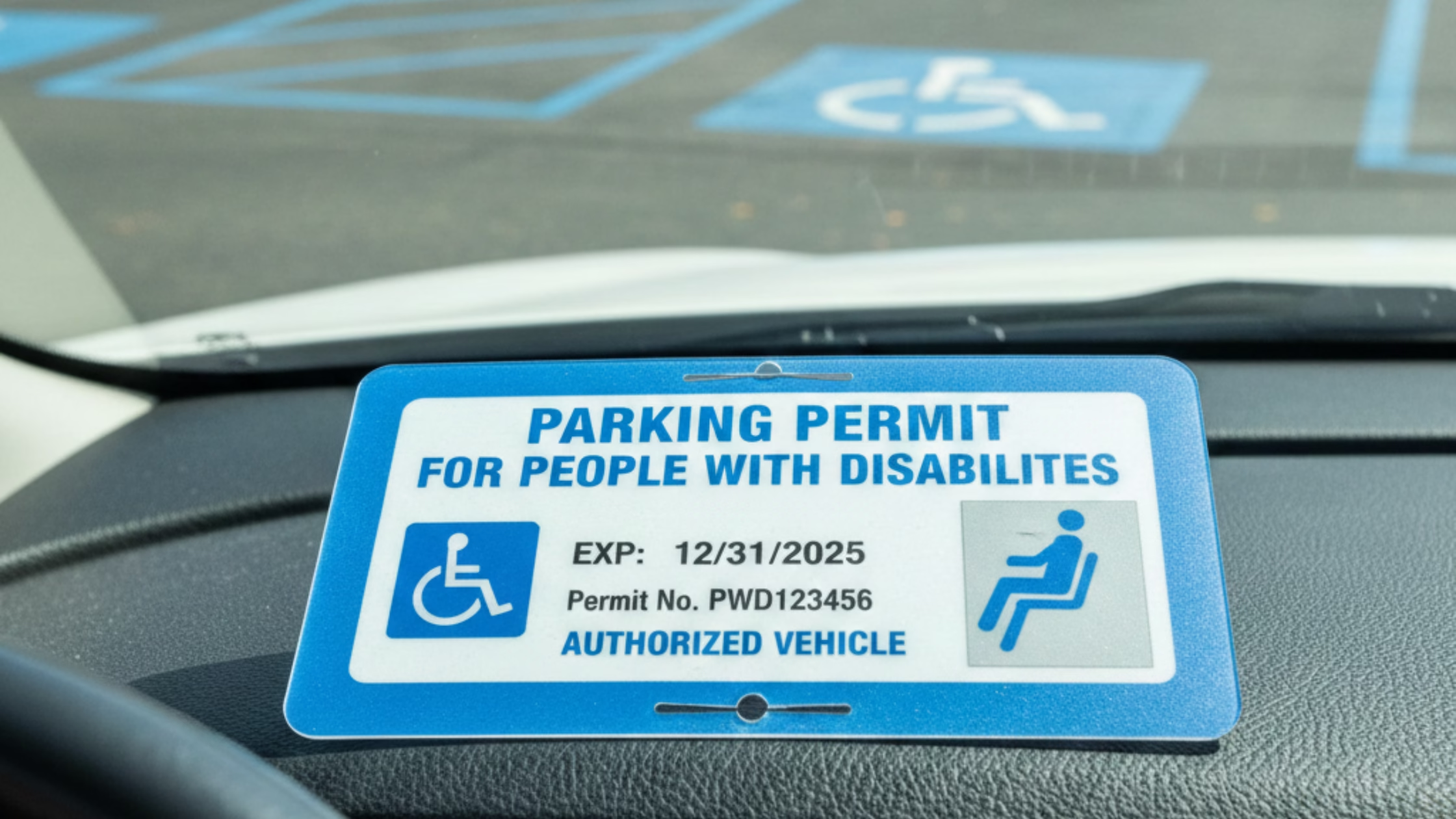
Your permit must be clearly visible inside your vehicle’s windscreen whenever you park in a disabled bay or use parking concessions. The permit should show:
- The permit number
- The expiry date
- Your photo (on some permits)
On-Street Parking in Marked Disabled Bays
When parking in designated disabled parking spaces on public streets:
- You must follow the time limit shown on the signage
- If the sign indicates “PAID” or “PAY & DISPLAY”, you need to pay for the first half of the allowed parking time
- Your permit must be displayed at all times
Parking in Regular Timed Bays
Under the Australian Road Rules, disability parking permit holders receive additional time in regular parking bays:
- 15-minute zones: Extend to 30 minutes (no charge)
- 30-minute zones: Extend to 2 hours (no charge)
- 2-hour paid zones: Extend to 4 hours (payment required for full 4 hours)
- 3-hour paid zones: Extend to 6 hours (payment required for full 6 hours)
Remember, you must pay for the entire extended time when parking in paid regular bays.
Off-Street Car Parks
Parking rules vary between different types of car parks:
Covered/Multi-Level Car Parks: Follow the same rules as on-street parking—display your permit, observe time limits, and pay for half the time in marked disabled bays.
Open-Air Council Car Parks: In many locations, permit holders can park all day in marked disabled bays free of charge. This applies to open-air council-operated facilities.
Quick Reference Guide to Parking Rules
| Parking Location | Time Allowed | Payment Required | Special Conditions |
| On-Street Marked Disabled Bays | As per signage | First half of parking time (if “PAID” or “PAY & DISPLAY” signs) | Permit must be displayed at all times |
| 15-Minute Regular Zones | 30 minutes | No charge | Permit must be displayed |
| 30-Minute Regular Zones | 2 hours | No charge | Permit must be displayed |
| 2-Hour Paid Regular Zones | 4 hours | Full 4 hours | Permit must be displayed |
| 3-Hour Paid Regular Zones | 6 hours | Full 6 hours | Permit must be displayed |
| Covered/Multi-Level Car Parks (Disabled Bays) | As per signage | First half of parking time | Follow same rules as on-street parking |
| Open-Air Council Car Parks (Disabled Bays) | All day | No charge | Free parking in marked disabled bays |
Using Your Permit Interstate
One of the biggest benefits of the Australian disability parking permit is that it can be used anywhere in Australia. You can use your permit when travelling to other states and territories across Australia.
However, keep in mind that:
- Parking concessions may differ between councils and states
- Always check with local authorities about specific parking benefits in your destination
- Time limits and payment requirements can vary
- The permit is transferable between vehicles as long as the permit holder is present
Important Conditions and Restrictions
To maintain your permit privileges, you must adhere to certain conditions:
Personal Use Only: The permit is issued to a specific individual and can only be used when that person is in or using the vehicle. Lending your permit to others is prohibited and may result in cancellation.
Vehicle Presence Required: You must be present in the vehicle or using it for the permit to be valid. This prevents misuse by other drivers or family members when you’re not travelling.
Misuse Consequences: Any abuse or misuse of your permit may result in it being revoked by the issuing authority. This includes using the permit when you’re not present or lending it to others.
Expiry Dates: Always check your permit’s expiry date. Using an expired permit can result in parking fines.
Community Organisations and Disability Parking Permits
Registered community service groups that regularly transport people with disabilities can apply for organisation permits. These permits allow organisations to provide better door-to-door services for their clients and complement existing disability transport services.
Organisations must:
- Demonstrate that they transport clients with mobility limitations
- Justify the number of permits required
- Ensure permits are only used when transporting eligible clients
- Renew permits every 3 years
Need Support with Transport and Mobility?
While a parking permit for people with disabilities improves parking access, comprehensive transport support can further enhance independence and community participation.
At TK Community Care, our dedicated Assistance With Travel & Transport services provide safe, comfortable door-to-door transport with trained staff who understand your needs. Contact us today to learn how our services can complement your parking permit and help you stay connected, independent, and active in your community.