Table of Contents
Quick answer
Under the NDIS Pricing Schedule 2026–27, the maximum price for a standard (Level 1) support worker is $73.58 an hour on weekdays. Rates rise to $81.07 on weekday evenings, $103.54 on Saturdays, $133.50 on Sundays and $163.46 on public holidays. Remote and very remote areas have higher limits.
For most participants, these costs come out of the Assistance with Daily Life category in your Core Supports budget. You don’t pay out of pocket for the support itself as long as your provider charges within the NDIS price limits and you have funding left.
What does in-home disability care include?
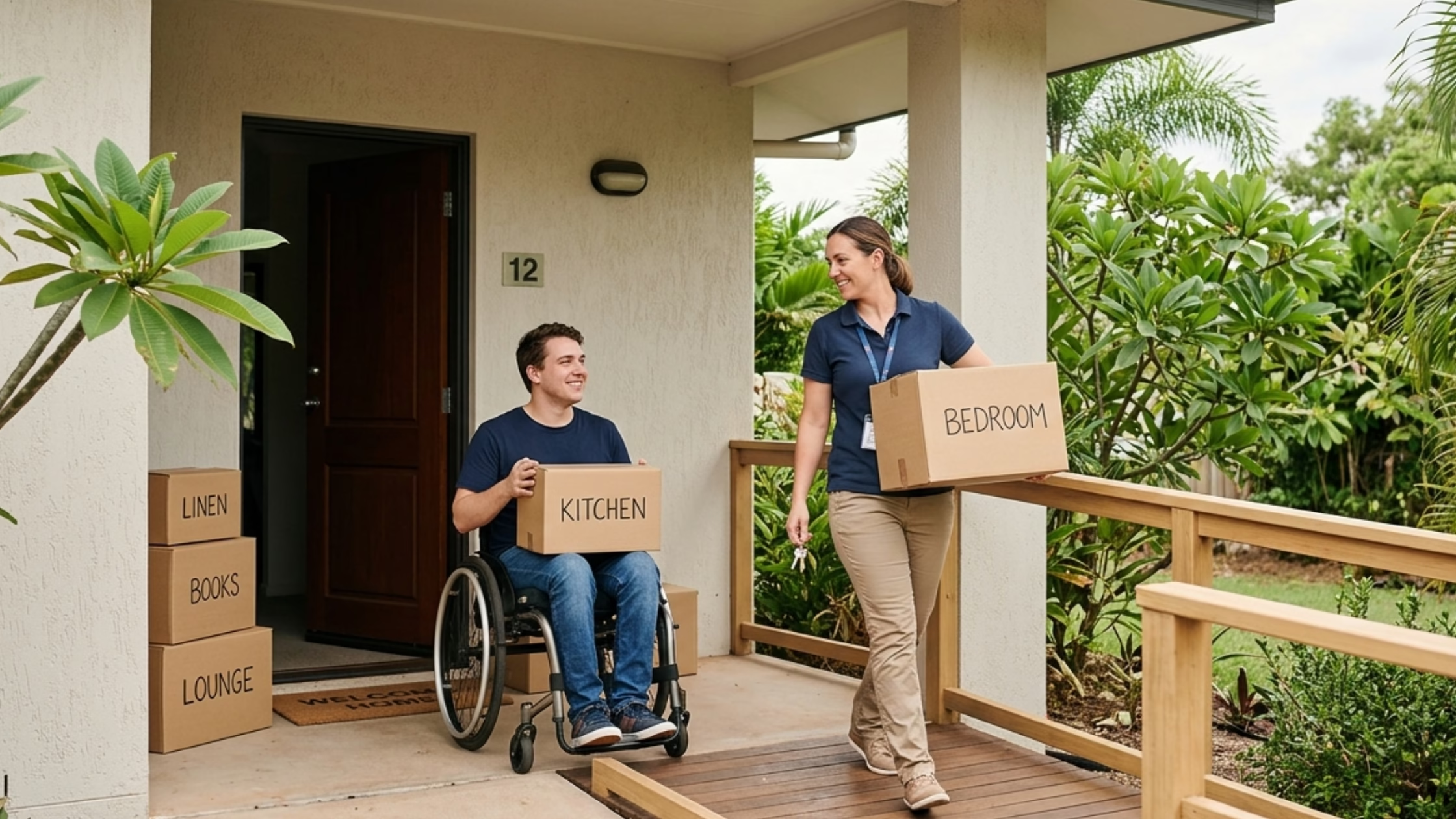
In-home disability care is support a trained worker gives you in your own home, so you can live the way you choose. Under the NDIS, it usually covers:
- Personal care: Assistance with bathing, getting dressed, personal hygiene, using the toilet and following medication routines
- Daily living tasks: Meal preparation, light cleaning, laundry and keeping your home safe
- Community access: Support with preparing for medical appointments, running errands, shopping and taking part in local activities
- Overnight support: A worker who sleeps over or stays awake through the night if you need help after dark
- Building skills: Support to learn tasks like cooking or budgeting so you need less help over time
Total costs vary based on the specific services delivered, the shift timing, and the level of care required. The next section explains how that works.
What changed in NDIS pricing for 2026–27?
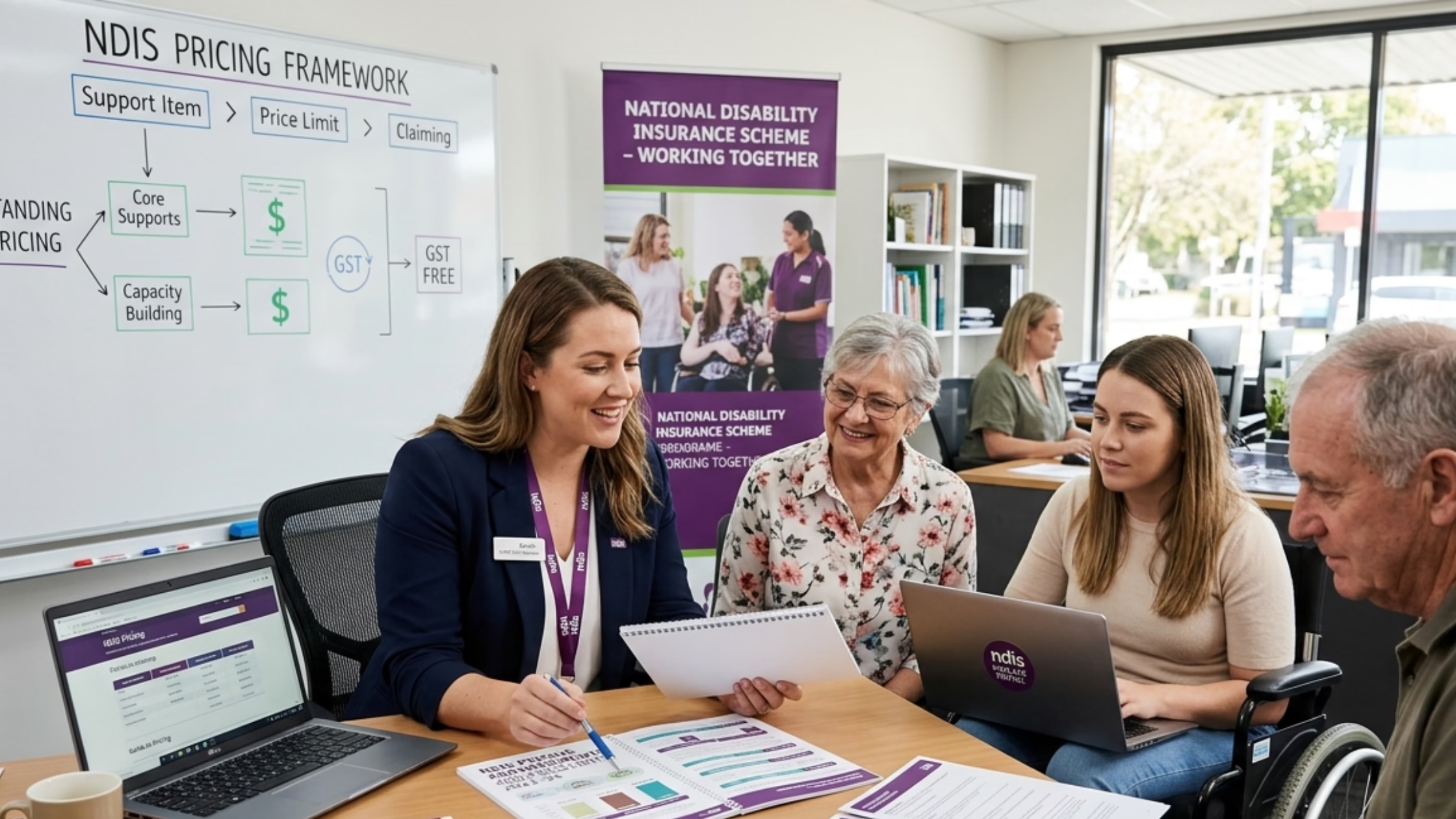
The NDIS doesn’t set one fixed price. It sets price limits: the most a provider can charge you for each type of support. The revised price limits came into effect on 1 July 2026. They became legally binding on 24 September 2026 following a pricing determination issued by the Minister for the NDIS. Here’s what’s different this year.
1. Division of the former pricing manual
The single NDIS Pricing Arrangements and Price Limits framework is now split. Figure limits are compiled in the NDIS Pricing Schedule 2026–27, while application rules and operational context reside within the standalone Annual Pricing Review.
2. Hourly caps for standard support saw an approximate 4.8% increase
The weekday daytime limit for a standard support worker rose from $70.23 to $73.58 an hour. This adjustment follows the Fair Work Commission’s annual review of minimum wages and related employment conditions.
3. Four-tier classification system for support worker
The applicable rate is determined by the type and level of support provided, alongside the relevant time-based pricing rules.
| Level | What it covers | Weekday daytime price limit |
| Level 1 | Standard support: personal care and daily living | $73.58 |
| Level 2 | High-intensity support, including complex behaviour support | $79.60 |
| Level 3 | Carer, employment and life skills support, such as skills training or help moving to further study | $83.87 (same rate at any time) |
| Level 4 | Psychosocial recovery coaching and assistive technology mentoring | $110.44 |
Most everyday in-home help is Level 1. If your plan includes high-intensity supports, ask your provider which level applies to each shift. Level 2 rates also rise on evenings and weekends, up to $176.84 an hour on public holidays.
4. Different price limits may apply to some unregistered providers
The NDIA has proposed a 10% reduction in the price cap for certain social, community and civic participation services delivered by unregistered providers, with a proposed start date of 1 January 2027. The government is still consulting on this, so it isn’t a confirmed rule yet. It doesn’t apply to personal care at home.
NDIS support worker price limits 2026–27 (Level 1)
The table below outlines the applicable maximum rates for Level 1 in-home assistance, effective from 1 July 2026. Your provider can charge less, but not more.
| Time of support | National (incl. Darwin) | Remote | Very remote |
| Weekday daytime (6am–8pm) | $73.58 | $103.01 | $110.37 |
| Weekday evening (after 8pm) | $81.07 | $113.50 | $121.61 |
| Weekday night (active overnight) | $82.57 | $115.60 | $123.86 |
| Saturday | $103.54 | $144.96 | $155.31 |
| Sunday | $133.50 | $186.90 | $200.25 |
| Public holiday | $163.46 | $228.84 | $245.19 |
| Sleepover (per night, flat rate) | $311.79 | $436.51 | $467.69 |
Unless stated otherwise, the amounts shown are hourly limits drawn from the 2026–27 NDIS Pricing Schedule. Higher caps for regional, remote, and very remote locations are determined via your location’s Modified Monash Model (MMM) rating.
What about cleaning and household tasks?
These have their own, lower price limits. House cleaning and other household activities are capped at $60.10 an hour, and help with personal domestic tasks at $61.16 (national rates). Selected domestic task price caps are scheduled for an upward adjustment effective 1 December 2026.
Why do weekends cost more?
NDIS price limits follow the award wages support workers are paid. Weekend and public holiday shifts carry penalty rates, so the same two hours on a Sunday costs about 81% more than on a weekday.
What does in-home care cost in real life? 3 examples
The best way to read a price guide is to run your own week through it. The following examples show how national Level 1 rates can apply to three common support arrangements.
Example 1: Weekday morning support
Sam receives two hours of assistance each weekday morning with personal care and preparing breakfast.
- 10 hours × $73.58 = $735.80 a week
- This works out to approximately $38,262 annually.
Example 2: Seven-day support
Charlotte has the same weekday mornings, plus 2 hours on Saturday and 2 hours on Sunday.
- Weekdays: $735.80
- Saturday support: Two hours at $103.54 per hour comes to $207.08.
- Sunday support: Two hours at $133.50 per hour totals $267.00.
- Total: $1,209.88 a week, or about $62,914 a year
Those 4 weekend hours add 64% to the weekly cost, even though they’re only 29% of the hours.
Example 3: Sleepover support
Jordan requires someone to stay overnight but needs assistance once settled for the night. One sleepover each week costs $311.79 at the national flat rate. An 8-hour active overnight shift at $82.57 an hour would cost $660.56, so the sleepover costs less than half as much. If Jordan requires more than brief assistance during the night, additional support may need to be billed under the applicable active overnight rate.
The estimates above exclude travel expenses, which may be charged separately when permitted under NDIS rules and agreed with the provider. Your support coordinator or provider can run the numbers on your exact roster.
Which NDIS funding category covers in-home care?
- Core Supports – Assistance with Daily Life: Covers most in-home personal care and household help.
- Core Supports – Assistance with Social, Economic and Community Participation: This category may fund eligible assistance to attend community events, participate in activities and access local services.
- Capacity Building – Improved Daily Living: This funding can help participants develop practical skills and increase their independence in everyday life, where the relevant support is included in their plan.
- Short Term Accommodation: Still funded from Core Supports, but from 2026–27 accommodation and support hours are claimed as separate line items.
Your plan management arrangement determines which providers you can engage and which pricing requirements apply. NDIA-managed participants must use registered providers. Plan-managed and self-managed participants have more choice, but price limits still apply to plan-managed funds.
Are there extra costs on top of the hourly rate?
Sometimes. Ask about these before you sign a service agreement:
- Provider travel: Providers can claim some of the time and vehicle costs of getting to you, if you’ve agreed to it. Time is capped at up to 30 minutes in cities and regional centres and up to 60 minutes in rural areas, and vehicle costs are charged per kilometre.
- Establishment fee: Eligible providers may charge a one-off fee of up to $735.80 for certain personal care or community participation services, subject to NDIS rules. Ask whether it applies to you.
- Late cancellations: Depending on the circumstances, a provider may charge for a cancelled shift or a participant’s absence. Any cancellation charges must comply with NDIS rules and the terms agreed upon in your service agreement.
- Activity expenses: Entry fees, restaurant meals and personal purchases during outings are generally the participant’s responsibility.
- Specialised support: Level 2 services involving high-intensity assistance may have higher price limits than standard Level 1 support.
A good provider will explain these upfront and put them in writing. If a charge appears to be above the permitted price cap, request a breakdown from your provider, including the support category and rate used to calculate the amount.
What Does In-Home Disability Care Cost in Darwin and the Northern Territory?
In Darwin and Palmerston, the standard national price limits usually apply. Some Territory communities are classed as remote or very remote under the Modified Monash Model, and they have price limits up to 50% higher. Gunbalanya, for example, is priced as very remote. When comparing service quotes outside Darwin, confirm whether the relevant location qualifies for remote or very remote pricing.
In some parts of the Top End, securing a suitable support worker can be more difficult than comparing hourly rates. That’s especially true for weekends and evenings. Setting up a recurring support schedule beforehand may make it easier to maintain reliable, ongoing assistance.
5 ways to make your in-home care funding go further
- Move flexible tasks to weekdays. Where your needs allow, scheduling cleaning, shopping and meal preparation on weekdays can cost less than booking the same services on Sundays.
- Choose a sleepover over active overnight if you rarely need help at night. Discuss any proposed sleepover arrangement with your provider first to ensure it meets your needs safely.
- Group short visits into fewer, longer shifts. This can cut provider travel costs.
- Build skills, not just support hours. With suitable Capacity Building support, participants can strengthen their daily living abilities and potentially become less dependent on regular assistance.
- Check your plan usage monthly. A support coordinator may help you monitor service expenses, review funding usage and identify potential overspending early.
Get an in-home support quote in Darwin
TK Community Care Services has provided disability support in Darwin and the Northern Territory for more than seven years. Our in-home support covers personal care, daily living and overnight support, priced within the NDIS 2026–27 limits. Our team will explain the proposed services and associated charges clearly, giving you the information you need before signing the agreement.
Explore our in-home support services or call (08) 8931 3224 to talk to our team in Winnellie.