Table of Contents
Moving into independent living is a significant step. For an NDIS participant, it can mean having greater control over daily routines, developing practical life skills, choosing where to live and building confidence outside the family home.
There is no standard timeframe for moving to independent living in Australia. The process can take weeks or several months, depending on the person’s support needs, NDIS funding, evidence requirements, accommodation availability, support arrangements and how much preparation is needed before the move.
For someone considering Supported Independent Living (SIL), the process usually involves several stages: deciding what type of living arrangement is appropriate, discussing home and living needs with the NDIS, gathering supporting evidence, obtaining funding where required, choosing suitable accommodation and support, and preparing for the actual transition.
The most effective approach is to start planning before a move is urgent.
What Does Independent Living Mean for an NDIS Participant?
Independent living does not necessarily mean living completely alone or managing everything without assistance.
For an NDIS participant, independent living can mean having greater choice and control over where they live, who they live with and how they receive disability-related support. Depending on their needs, this may involve Supported Independent Living (SIL), Individualised Living Options (ILO), assistance with daily living, home modifications, Specialist Disability Accommodation (SDA) or a combination of supports.
The NDIS explains that home and living supports can help participants develop independence, receive assistance with personal care and household tasks, improve accessibility and use assistive technology where appropriate. The NDIS does not generally fund ordinary rent or household bills.
That distinction matters. Independent living is a goal and living arrangement; SIL is one type of funded support that may help a person achieve it.
How Long Does It Usually Take to Move to Independent Living?
There is no NDIS rule saying that an independent living transition must take a particular number of weeks or months.
The timeframe depends on the complexity of the participant’s circumstances.
A relatively straightforward move may progress quickly when the participant already has appropriate funding, suitable accommodation is available and their support requirements are clearly documented.
A more complex transition can take considerably longer when the participant needs new home and living funding, updated assessments, specialised accommodation, significant modifications or carefully coordinated support.
A useful way to think about the process is:
- Explore the person’s goals and support needs
- Identify the most appropriate living option
- Gather supporting evidence
- Discuss the request with the NDIS
- Obtain or confirm appropriate funding
- Find suitable accommodation and support
- Prepare for the transition
- Move in and gradually establish the new routine
The NDIS currently advises participants requesting home and living supports to consider their disability-related support needs, goals and existing informal or community supports before discussing their options with their my NDIS contact.
What Can Affect the Timeline?
Several factors can make the transition faster or slower.
1. Existing NDIS funding
If the participant already has appropriate funding in their plan, some of the administrative work may already be completed.
If they need additional home and living supports, the NDIS may need to assess their circumstances and supporting evidence before making a decision.
The NDIS states that participants requesting home and living supports should provide recent evidence explaining their daily support and housing needs, the impact of their disability on everyday activities, and why other home and living options may not meet those needs.
2. Supporting evidence
Good evidence can make the participant’s needs much clearer.
Depending on the circumstances, evidence may come from relevant treating professionals such as an occupational therapist. A functional capacity assessment may also help explain how a person’s disability affects areas such as mobility, self-care, communication, learning and self-management.
For home and living requests, the NDIS specifically looks for information about what support is required, when it is required and how the person’s disability affects their ability to manage daily life and housing.
This is one reason it is better to prepare early rather than wait until a move becomes urgent.
3. Finding suitable accommodation
Funding alone does not necessarily mean that a participant can move immediately.
The right accommodation still needs to be available and appropriate for the participant’s needs, preferences, accessibility requirements and desired location.
For example, someone may prefer a shared home with compatible housemates, while another participant may need a more private or highly accessible living arrangement. When considering an SIL House, participants and families should look beyond the property itself and consider factors such as accessibility, location, compatibility with other residents, support requirements, household routines and opportunities for community participation.
4. Choosing the right support model
SIL is not automatically the best option for every participant.
The NDIS recognises several home and living options, including assistance with daily living, ILO, SIL, home modifications, SDA and medium-term accommodation.
Choosing the correct model early can prevent unnecessary delays caused by pursuing a support arrangement that does not match the participant’s actual needs.
What Is the Process for Moving Into Supported Independent Living?
For participants considering SIL, the process should begin with the person’s goals rather than the accommodation itself.
Step 1: Define what independent living should look like
Start by asking practical questions:
- Where would the person like to live?
- Would they prefer to live alone or with housemates?
- What daily tasks can they manage independently?
- What tasks require assistance or supervision?
- Do they need overnight support?
- What accessibility features are required?
- What community, transport and social connections are important?
- What skills could be developed before or after moving?
These questions help create a clearer picture of the support required.
Step 2: Explore the available NDIS options
The NDIS may fund different types of home and living supports depending on the participant’s circumstances.
Supported Independent Living (SIL) provides funding for support workers to assist or supervise a participant in their home. Current NDIS guidance describes SIL as support that can operate 24 hours a day, seven days a week, depending on the participant’s needs. It can include assistance with personal care, cooking, cleaning, routines and skill development.
For participants considering SIL Accommodation, it is important to understand that the accommodation itself and the disability-related support provided within the home are not necessarily the same thing. The participant may need to consider both where they will live and what level of support they require to live safely and develop greater independence.
Individualised Living Options (ILO) are designed around where and how a person wants to live and can include arrangements such as living with housemates or in a host arrangement.
Specialist Disability Accommodation (SDA) is different again. SDA is the specialised housing itself for eligible participants with very high support needs or extreme functional impairment. SIL can sometimes be provided alongside SDA, but the two supports serve different purposes.
Step 3: Gather evidence
The NDIS recommends recent evidence from relevant professionals that explains the participant’s functional capacity, daily support requirements and housing needs.
The stronger the evidence reflects the person’s actual day-to-day circumstances, the easier it is to understand why particular supports may be appropriate.
Step 4: Discuss the request with the NDIS
A participant can discuss their home and living goals and needs with their my NDIS contact.
The NDIS reviews the information and evidence provided before determining whether home and living supports can be included in the participant’s plan. If supports are approved, the participant may then progress to arranging the appropriate supports and accommodation.
Step 5: Choose a provider and prepare for the move
Once funding and the living arrangement are sufficiently established, the participant can work with their chosen provider to plan the practical transition.
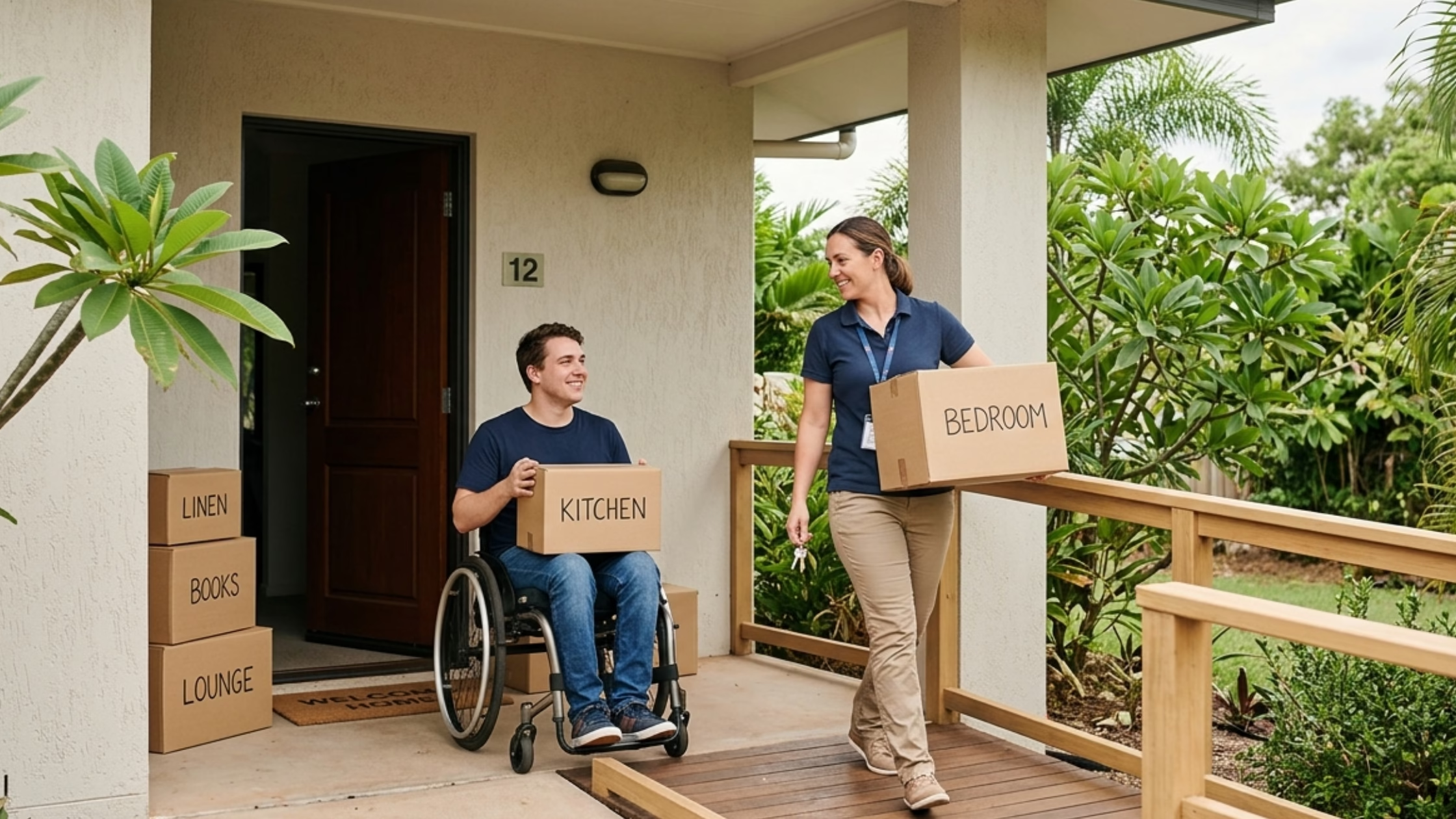
This may include establishing routines, identifying support requirements, discussing household expectations, meeting potential housemates and making sure the participant understands what will happen on moving day.
What Can Delay a Move to Independent Living?
The most common delays are not necessarily caused by the physical move itself.
They can occur because:
- funding for the required support has not yet been approved;
- supporting evidence is incomplete or outdated;
- the preferred accommodation is unavailable;
- home modifications are required;
- the participant’s support needs are complex;
- suitable housemates or support arrangements have not been identified;
- the participant or family needs more time to prepare emotionally and practically;
- several organisations need to coordinate the transition.
This is why “How quickly can I move?” is often the wrong first question.
A better question is:
“What needs to be ready before I can move safely, sustainably and with the right support?”
That approach helps distinguish a rushed move from a well-planned transition.
How Can You Prepare for Independent Living?
Preparation can begin well before the actual move.
A participant may gradually practise skills such as:
- preparing simple meals;
- managing a shopping list;
- keeping a room or living area organised;
- doing laundry;
- following a daily routine;
- managing appointments;
- understanding basic household responsibilities;
- using public or supported transport;
- communicating support needs;
- making decisions about personal preferences.
The aim is not to expect someone to become completely independent before they move.
Instead, the transition can become an opportunity to build independence with the right level of support.
This is consistent with the purpose of SIL, which the NDIS describes as helping people live as independently as possible while developing skills.
Does Independent Living Mean Living Without Support?
No.
For many people with disability, genuine independence means having the right support to make their own choices rather than having to do everything without assistance.
A participant may need help with personal care, cooking, household tasks, medication routines, safety, social participation or other activities while still having meaningful control over their home and daily life.
SIL is specifically designed around this principle. The NDIS states that support can be shared or individual depending on the participant’s needs, while one-to-one SIL is only funded in limited circumstances.
The goal should therefore be supported independence, not unsupported independence.
What Does SIL Pay For?
SIL funding is intended to cover disability-related support delivered by support workers. It does not generally pay for ordinary living expenses.
The NDIS states that SIL cannot be used for costs such as rent, groceries, utilities or other ordinary day-to-day expenses.
This distinction is important when budgeting for a move.
A participant should consider both:
NDIS-funded disability supports
and
ordinary household and personal expenses.
Understanding both sides before moving can help prevent financial pressure later.
How TK Community Care Can Support the Transition
The transition to independent living should be based on the participant’s goals, support needs and preferred lifestyle.
TK Community Care provides NDIS Supported Independent Living services designed to assist participants with daily activities and skill development. Its SIL services include support with areas such as personal care, meal preparation, household tasks, community access and developing everyday independence.
TK Community Care also provides daily living and life skills support, which can complement a participant’s broader independence goals.
If accommodation or support needs change during the transition, temporary options such as short-term or medium-term accommodation may also be relevant in appropriate circumstances. The NDIS describes Medium Term Accommodation as a temporary option of up to three months in specific situations, such as when a participant cannot yet move into their long-term accommodation.
The Best Time to Start Planning
There is no single countdown for moving to independent living.
For one participant, the transition may be relatively straightforward. For another, it may require extensive planning, assessments, funding decisions, accommodation searches and preparation.
The important point is that independent living is a process, not simply moving into a new house on a particular date.
Starting early gives participants, families, support coordinators, allied health professionals and providers more time to identify the right living arrangement, gather evidence, develop practical skills and coordinate support.
If independent living is a future goal, the first step is to define what a successful living arrangement would look like for the individual and then work backwards from that goal.