Table of Contents
Need equipment to help you move safely, communicate effectively, or complete everyday activities with greater independence? If you’ve already met the NDIS eligibility requirements, NDIS Assistive Technology (AT) funding may help you access the right supports for your needs.
What Is NDIS Assistive Technology?
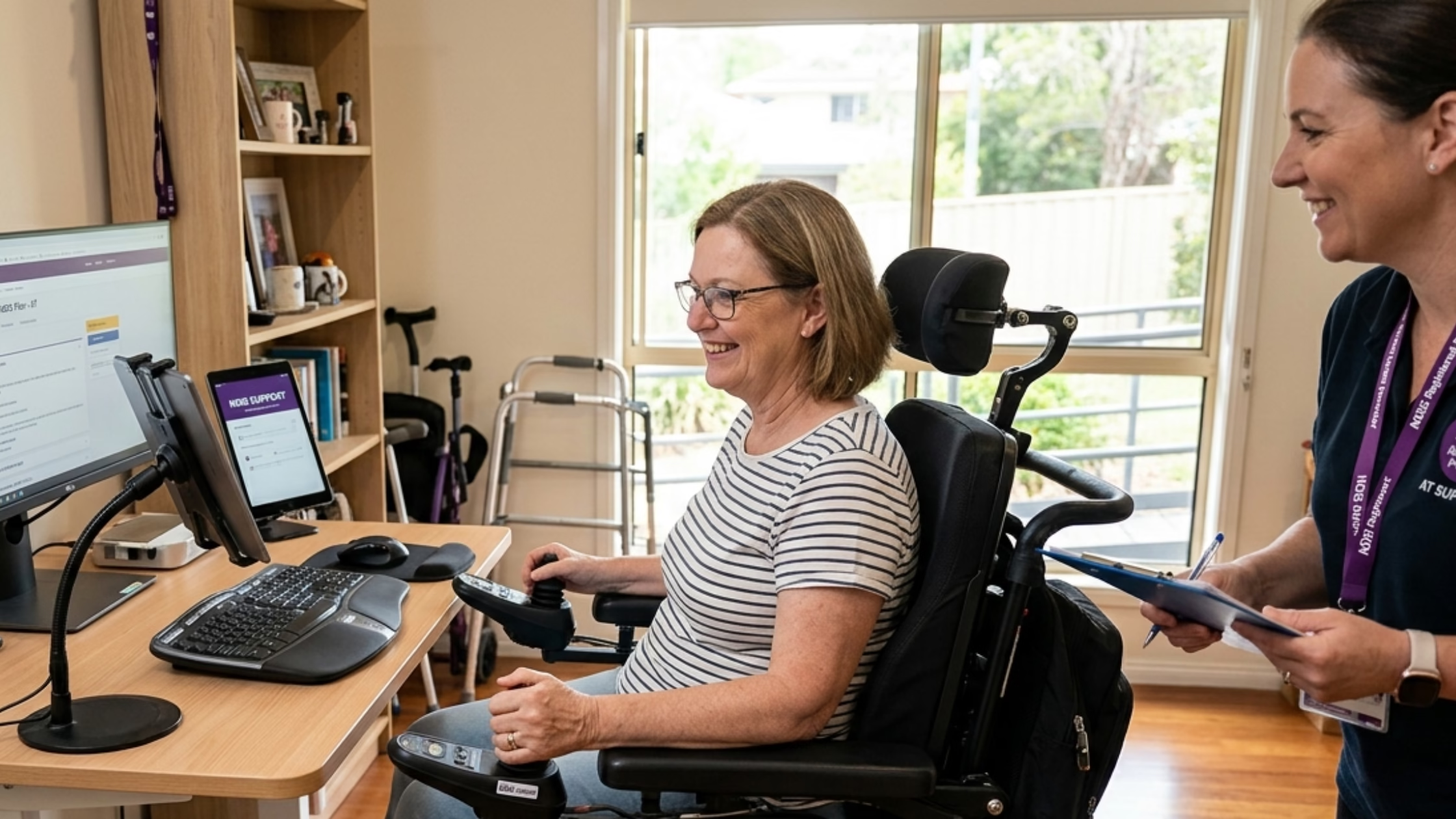
NDIS Assistive Technology refers to any device, software, or equipment that helps you do things you otherwise couldn’t do because of your disability.
The NDIA’s rule of thumb: To get it funded, every item must meet the NDIS “reasonable and necessary” test. That means it must:
- Relate directly to your disability
- Help you reach a goal in your NDIS plan
- Be safe to use
- Offer value for money
How Is NDIS Assistive Technology Funded? (The 2026 Cost Tiers)
The NDIA splits AT into three cost tiers. Each tier has entirely different rules for how you purchase the item and what evidence you need to provide.
| Cost Tier | Price Range | Budget Category | Evidence & Approvals Required |
| Low-Cost AT | Under $1,500 | Core Supports (Consumables) | No formal approval needed. Buy it directly. A quick letter from a therapist is recommended but not mandatory. |
| Mid-Cost AT | $1,500 – $15,000 | Capital Supports (AT) | No prior NDIA approval needed if funded, but you must have a brief assessment letter from an AT assessor (e.g., an OT). |
| High-Cost AT | Over $15,000 | Capital Supports (AT) | Strict prior NDIA approval required. Requires a full multidisciplinary assessment report and an official supplier quote. |
What Counts as Low Cost Assistive Technology NDIS?
Low cost assistive technology NDIS items are simple, everyday aids, such as:
| AT Category | Common Everyday Examples |
| Kitchen & Daily Living | Adapted cutlery, non-slip mats, one-handed jar openers, dressing sticks, long-handled shoehorns. |
| Bathroom & Mobility | Standard shower stools, toilet surround rails, portable mini-ramps, non-custom walking sticks. |
| Digital & Communication | Specialised screen readers, modified computer mice, basic speech-to-text applications. |
| Personal Safety | Automatic pill organisers with alarms, basic fall sensors, personal GPS trackers. |
Tip: Even though formal quotes aren’t required for low cost assistive technology NDIS items, always keep your receipts and a brief note from your therapist. If you are ever audited or undergo a plan review, this provides instant proof that the purchase was reasonable and necessary.
Understanding Mid-Cost & High-Cost AT Equipment
As items move beyond low cost assistive technology NDIS thresholds, the level of evidence required by the NDIS increases.
Mid cost ($1,500–$15,000): complex wheelchairs, hi-lo beds, advanced communication devices. You’ll need written advice from an OT, physio, or speech pathologist.
Mid-Cost AT ($1,500 to $15,000)
This tier covers standard specialised equipment such as
- Manual wheelchairs
- Entry-level hi-lo electric beds
- Advanced communication devices
To access this funding, you need written advice from a qualified practitioner (such as an Occupational Therapist, Physiotherapist, or Speech Pathologist) confirming that the device is the right match for your body and your home.
High-Cost AT (Over $15,000)
This tier is reserved for highly complex, customised solutions such as:
- Custom power wheelchairs
- Specialised vehicle modifications
- Structural home modifications (like stairlifts and ceiling hoists)
You cannot buy these items outright. You must:
- Work with an assessor to complete a comprehensive trials process
- Get a detailed technical report
- Submit an official supplier quote
- Wait for the NDIA to sign off on the funds
What Assistive Technology Can I Get Through My NDIS Plan?
The NDIS funds a massive variety of equipment, provided it directly offsets the impacts of your disability.
Approved NDIS AT Categories:
| Category | Assistive Technology Examples |
| Mobility aids | Walking frames, custom manual/power wheelchairs, postural seating systems. |
| Communication aids | Dedicated speech-generating devices, specialised text-to-speech software. |
| Hearing supports | Hearing aid accessories, Bluetooth assistive listening transmitters. |
| Vision aids | High-grade screen readers, electronic magnifiers, refreshable Braille displays. |
| Bathroom equipment | Specialised mobile shower commodes, over-toilet ergonomic aids. |
| Pressure-care equipment | Alternating-pressure mattresses, specialised pressure cushions, hoist transfers |
What the NDIS Will NOT Fund:
| Category | Assistive Technology Examples |
| Mainstream furniture & appliances | Standard beds, standard TVs, household kettles, or split-system air conditioners. |
| Duplicate equipment | A second backup wheelchair, just in case the first one breaks (the NDIS funds repairs instead). |
| Lifestyle choices: | Luxury home upgrades or pool installations that don’t directly target disability-specific functional barriers. |
| General emergency infrastructure | Backup generators or power banks for general blackouts. |
Can I Use My NDIS Plan to Buy a Tablet or Smartphone?
Generally, no. Tablets and smartphones are considered everyday items.
However, the NDIS may fund a device if it is essential for disability support, such as running a specialised communication app. You’ll need evidence that:
- The device is required for your disability needs
- A standard device is not suitable
- You do not already have a compatible device
Step-by-Step: How to Get AT Approved and Funded
1. Link It to Your NDIS Goals
Your device must support a goal already in your plan (e.g., a powered wheelchair for “more community participation”).
2. Get an AT Assessment
An OT, physiotherapist, or speech pathologist will assess your needs and recommend the right equipment.
3. Trial and Collect Evidence
For mid and high-cost items, trial options and gather reports explaining why the equipment is suitable. High-cost items also need a supplier quote.
4. Submit to the NDIA
NDIA reviews your assessment report and supporting documents. If approved, funding is added to your plan for the equipment.
Getting the Most Out of Your Assistive Technology Funding
- Focus on your needs, not a specific product: Explain the daily challenges you face. The NDIS funds solutions that address disability-related barriers, not brand requests.
- Try before you buy: Trial equipment or rent it first to make sure it is comfortable and suitable for your needs.
- Get support early: If you receive NDIS Support Coordination, your Support Coordinator can help you understand your budget, connect with suitable assessors, and navigate the funding process before purchasing Assistive Technology. Alternatively, your Plan Manager can also help you understand your funding options before getting started.
Need Help Navigating Your NDIS Assistive Technology?
Trying to work out what NDIS Assistive Technology you might be eligible for? As a trusted NDIS provider in Darwin, the team at TK Community Care is here to help. We support participants and families throughout the disability journey, from understanding funding and eligibility requirements to connecting you with the right assessors, equipment, and ongoing supports. Get in touch with TK Community Care today to take the next step with confidence.